project.
Theatre of flows
role.
spatial, project manager, researcher
sponsored by.
Taiwan Contemporary Culture Lab, Taipei (affiliated with the Ministry of Culture in Taiwan), Goethe-Institut Taipei and Arts Facilities Management Center, Taoyuan
execution.
2019 Taiwan & Germany
presenter.
Taiwan Contemporary Culture Lab
team.
raumlaborberlin, Group B, Double Grass, Sabine zahn, Sam boche, Benoit Verjat, Ichieh Liu, James Teng, Huahchih Liang, Steve Tsai
Theatre of Flows
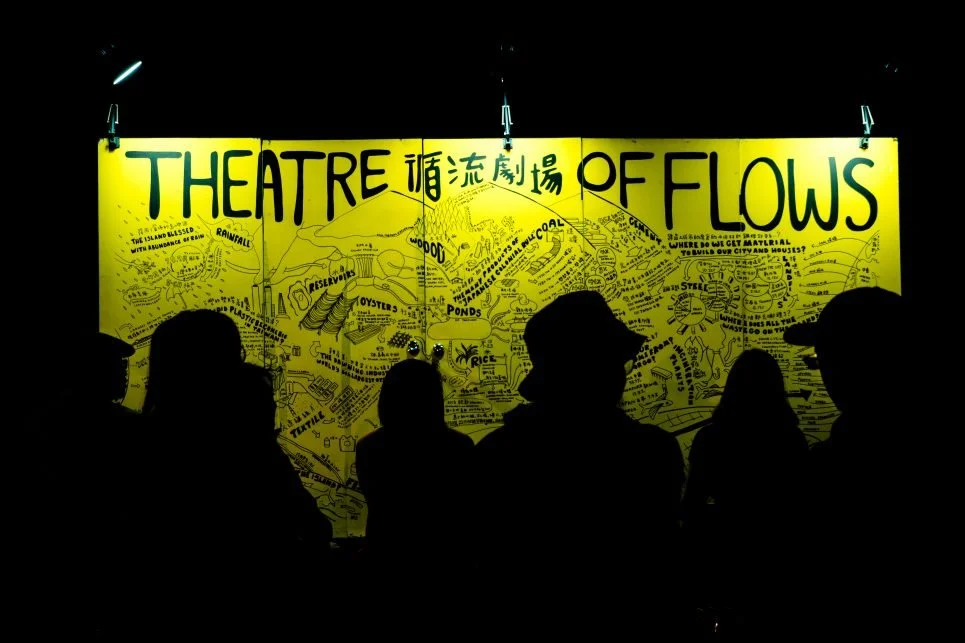
In the Theatre of Flows, we staged a journey through the real world of Taiwan as a performative learning landscape. Here the island took the shape of a system where resources, energy and man-power flowed in and out. They looked upon subjects that were in relation to the interconnectivity of flows in the urban and natural environment: ocean waste and the fishing industry of Keelung Harbor, the 2581 ponds of an irrigation system developed by the Japanese in the city of Taoyuan and the oyster farming community vs the largest private plastic refinery in the coastal areas of Yunlin. The collection of facts, figures, embodied knowledge and encounters with local experts on their expedition were later presented in a performative format. The project used the old army dormitory at Taipei’s Contemporary Culture Lab (C-lab) as a research station where material was collected, discussed and showcased.

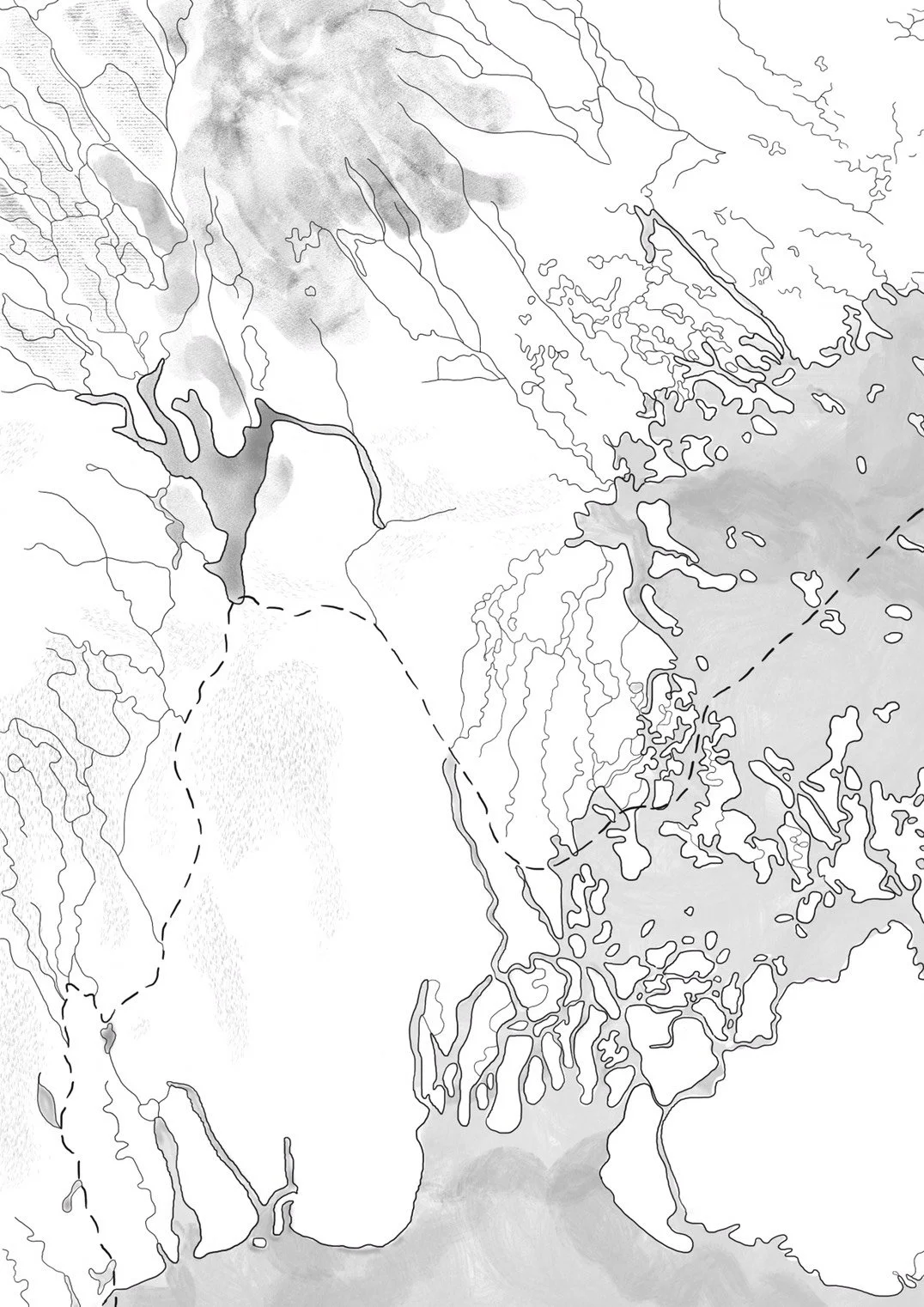
(left) diagram showcasing the layers within the project scope
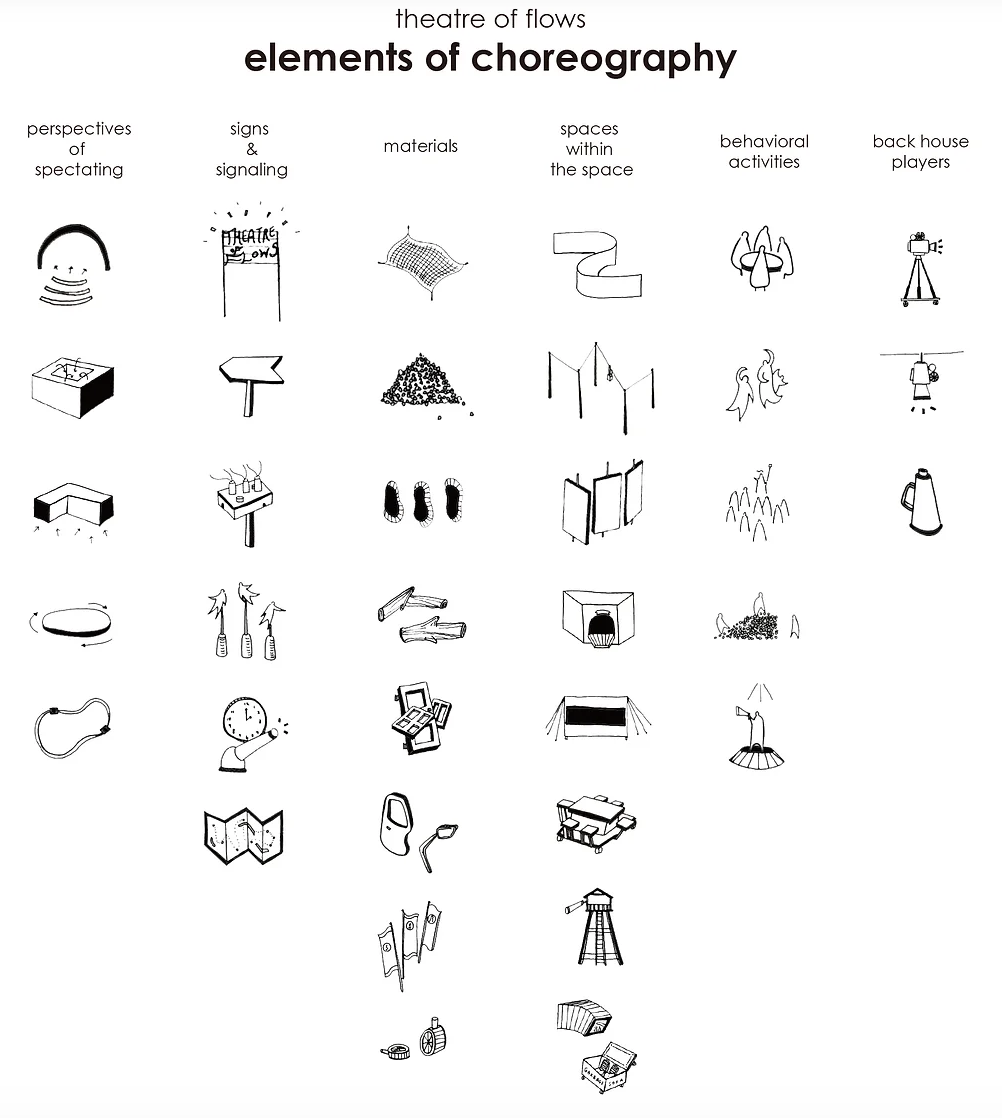
(bottom) imagining possible elements of choreography
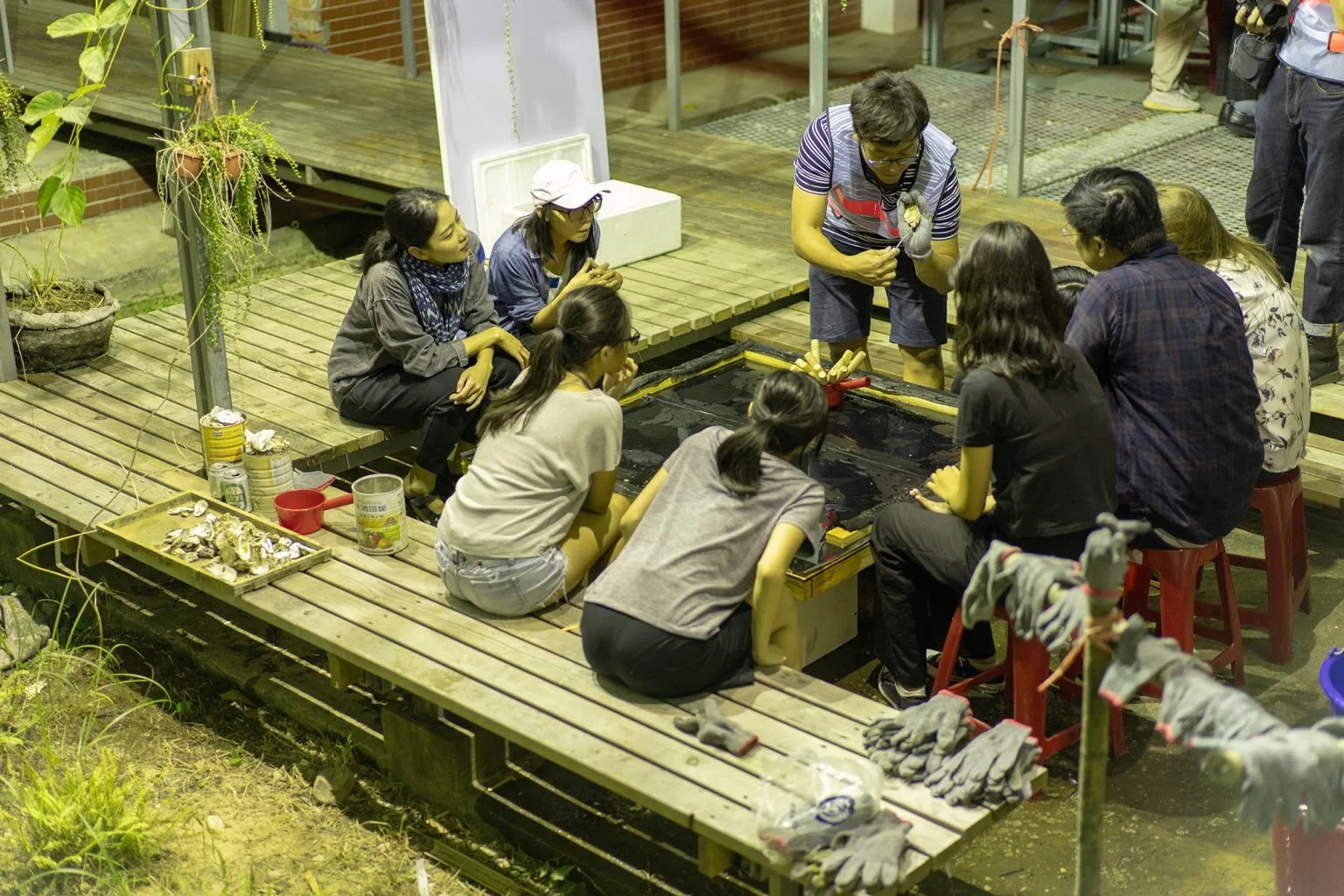
(top) the body as an organ of knowledge perception – opening and killing an oyster ©Benoit Verjat
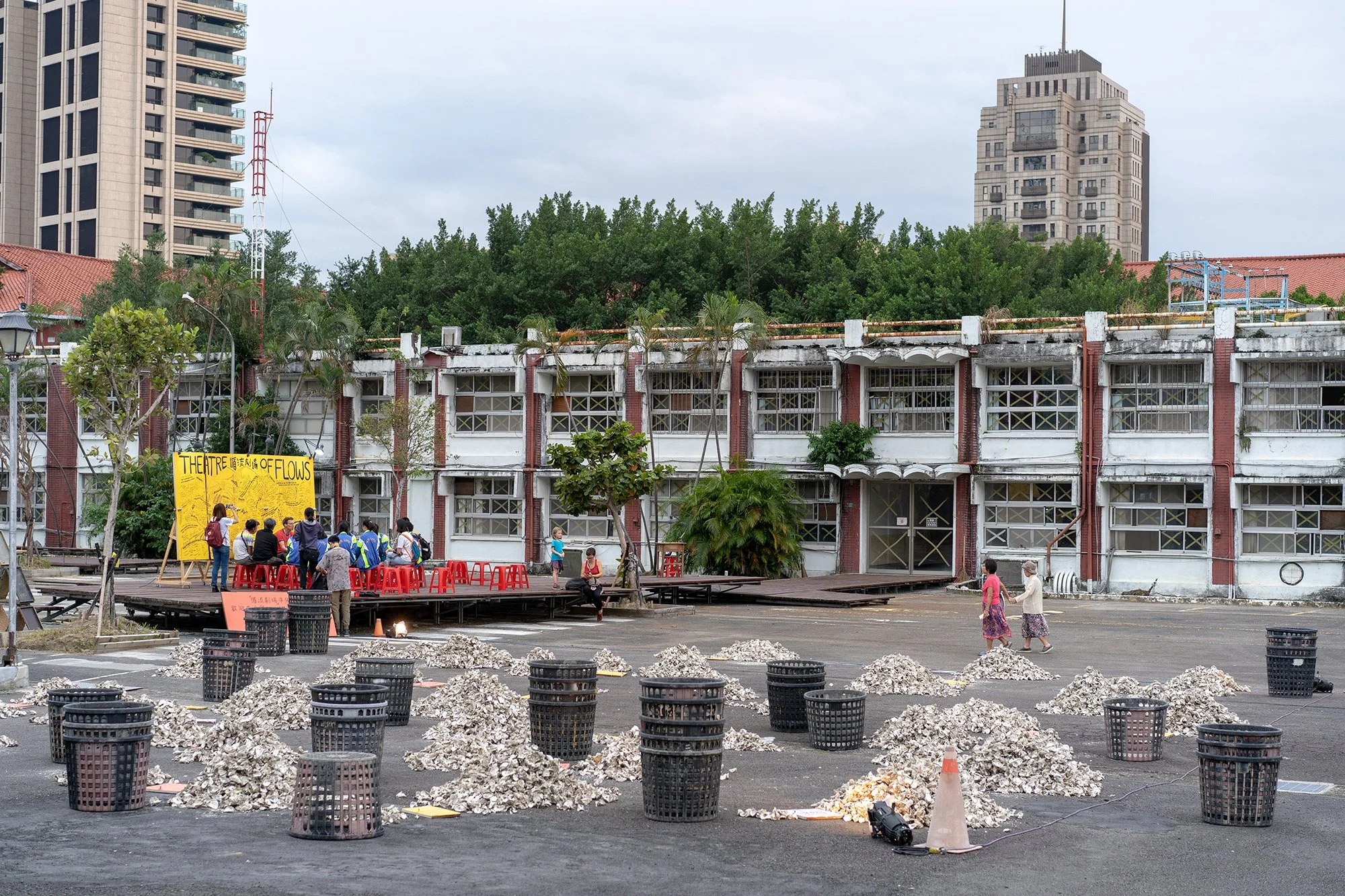
(top) piles of oyster shells resemble collected statistics put into groups of comparisons ©Benoit Verjat
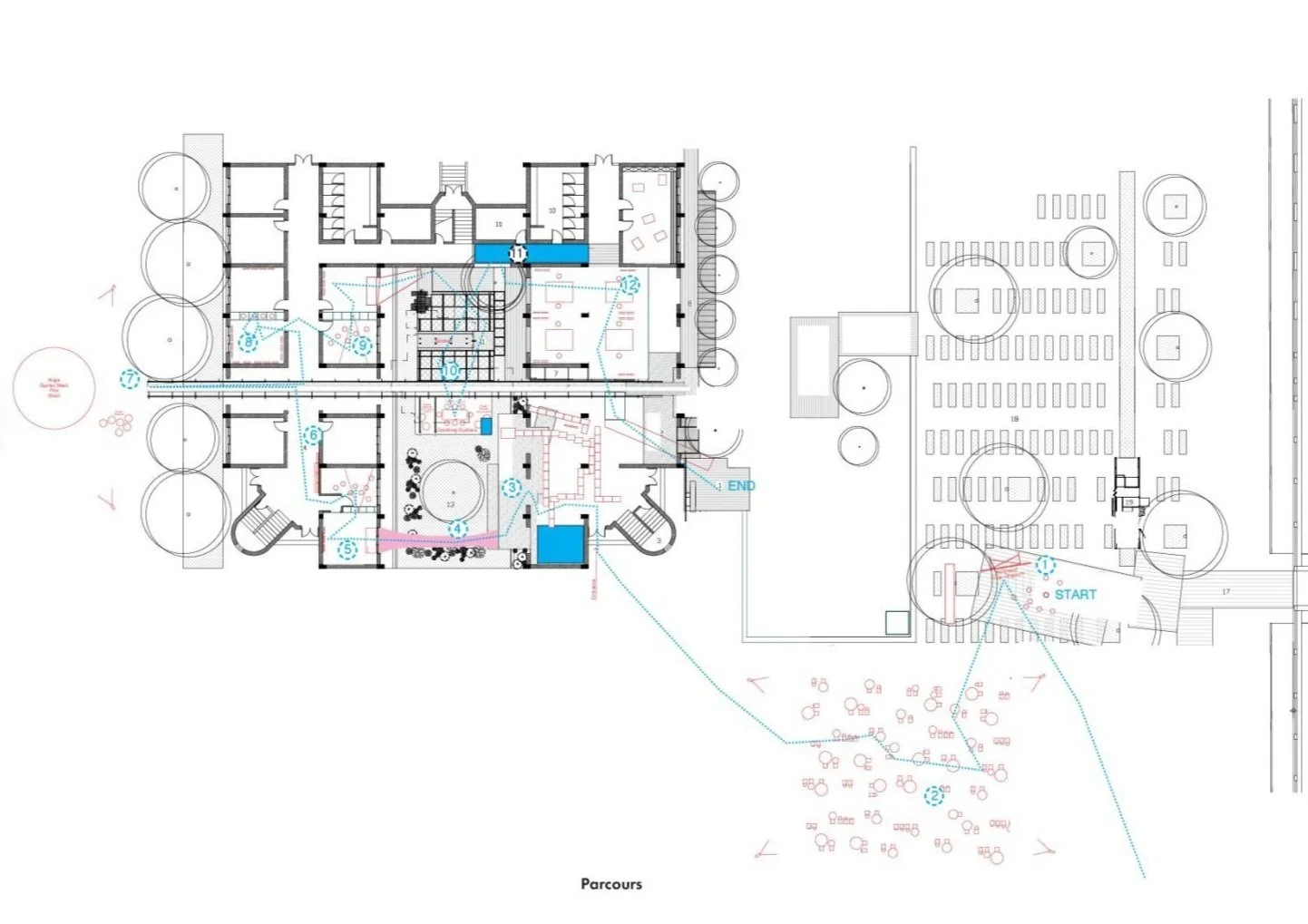
Theatre of Flows is staging a journey to the real world - an independent island surrounded by inevitable global dynamics. Experts and performers led the visitors on a seducing Parcours through a series of thematically arranged spaces. These spaces appeared as editing rooms featuring videos, photos, installations and other findings of a quotidian life full of paradox and the confusing reality of their origins, circumstances, and consequences.
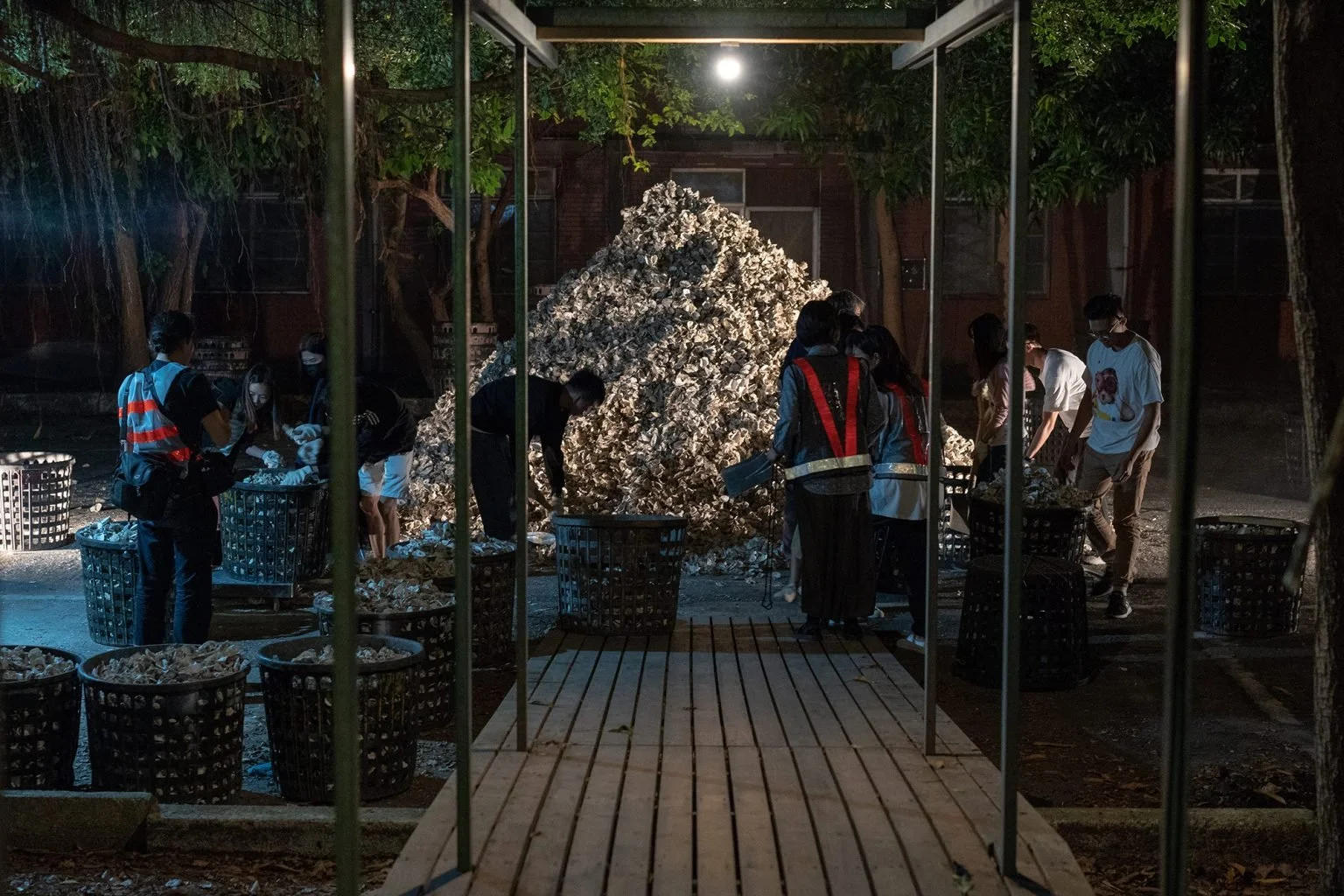
The body as an organ of knowledge perception – shoveling oyster shells ©Benoit Verjat

5 participants reciting their notes on their own perceptions in the Bahdodze Harbor, Keelung © Tara Kan
Site one - Taoyuan, the industrial city of 2851 ponds
When raumlabor landed in Taoyuan International Airport, we were mesmerized by the aerial view of a funny freckled carpet made up of little bodies of water. The 2,851 ponds of Taoyuan are the remains of an irrigation system invented for rice production during the time when Taiwan was under Japanese colonial rule (1985-1945). Today, Taoyuan’s rural history is coming to an end as Taiwan’s rice comes from Vietnam, China and Thailand where production is cheaper, so the ponds are not needed anymore. Ponds are turned into development zones, airport extensions, recreational zones, or fish and solar farms. On their research journey, raumlabor came across an organic aquaponic farm that uses a system of 10 small ponds to filtrate industrially polluted water to grow fish and crops. Could Taoyuan, with its 2.8 million inhabitants, become the first metropolis worldwide to use big scale natural filtering systems to clean their water and feed their inhabitants?
The translated format of the ponds into the interactive installation is represented by a model of the canal and pond system of Taoyuan, made by approximately 2851 unused rice plates used for growing rice seedlings.
A special thank you to the support of Professor Chen and students from National Taipei University of Technology (NTUT) whom worked with us during a workshop to construct the pond installation.
Special thanks to local partner and experts, Professor Chen (Department of Design, Chung Yuan Christian University) and Small Du on the knowledge of the ponds.
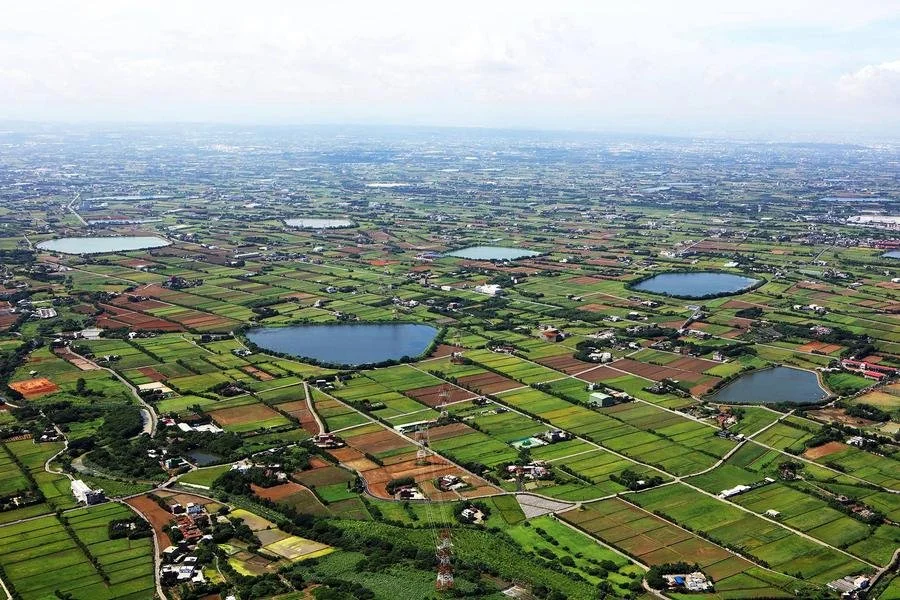
The freckled landscape of ponds over Taoyuan ©cgnews
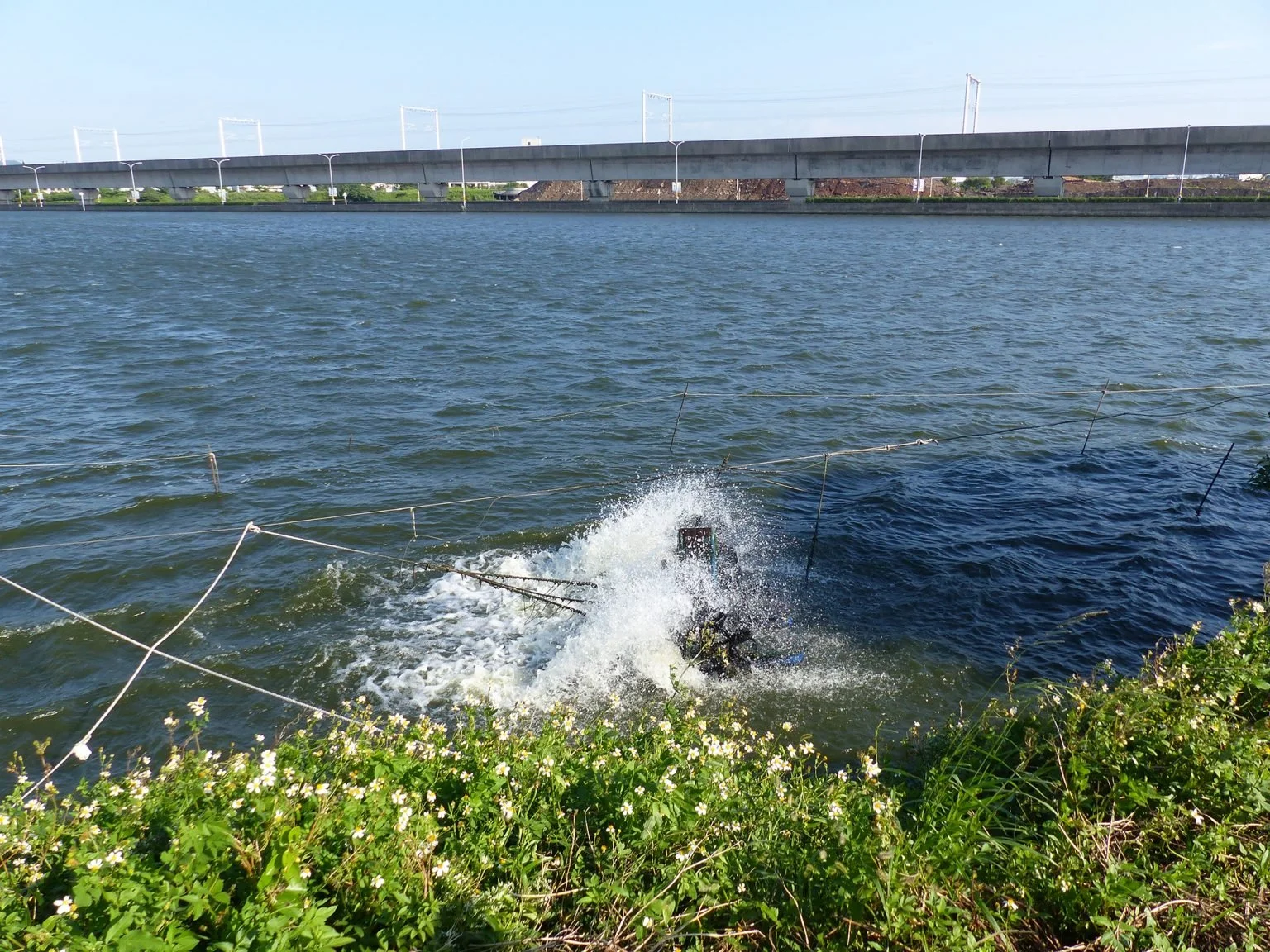
One pond cut through by the High Speed Train trails, now used as fish farms ©raumlaborberlin
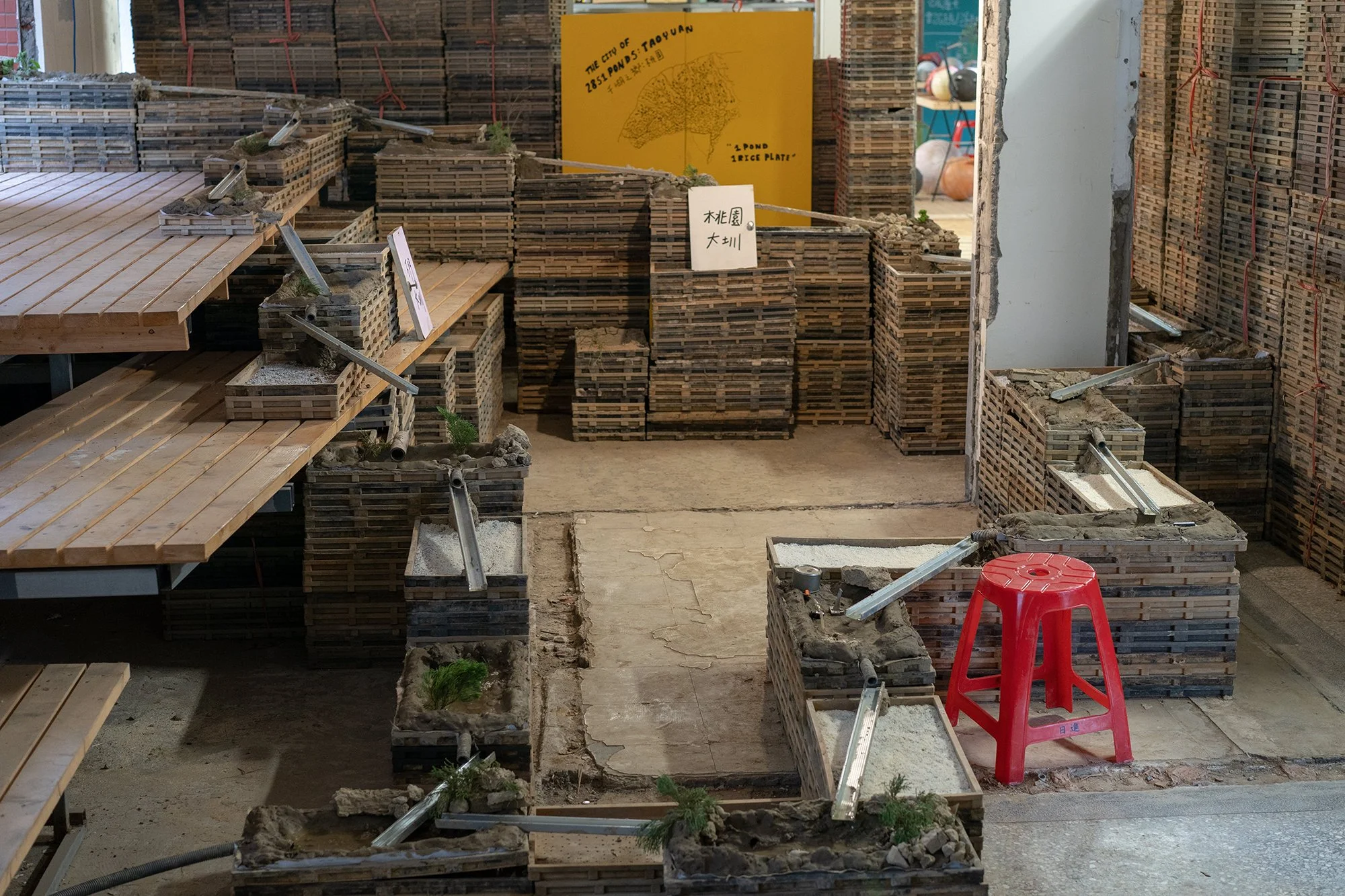
The city of 2851 ponds, represented by 2851 rice plates used for growing rice seedlings ©Benoit Verjat
Site two - Waters & shores of Keelung, the collecting bin of waste
Taiwan’s fishing industry has been confronted by transformations that do not seem to relate: the growing numbers of seafood consumption vs. the sinking numbers of fish in the sea, the sinking prices for fish vs. the growing costs for sustainable fishing, the sinking prices of fishing net vs. the lack of solutions for recycling methods. The result is the need to fish more resourcefully but, with less ability to do so. The Environmental Fleet in Keelung established by local activists and fishermen addresses one big obstacle: ocean waste. Collective trips are made to gather the waste that ends up on shorelines and in surrounding waters. The story of the fishing net, a very contemporary allegory – it’s cycle of production, use and recycling – became raumlabor’s fetish object in this universe.
Special thank you to the team at Zhengbin Arts Co-create, Mr. Lin (Keelung Environmental Fleet), Mrs. Tsai (Marine division, Keelung Government), Mr. Wang (Keelung Environment Fleet), Mr. Wang (Keelung recycle station), Mr. Ye (Hepin Wetland Environment Farm) for supporting local research.
Special thank you to partners from Group B, Small Rabbit & Hanshyang Hsu for the architectural construction of the fishing net bridge.
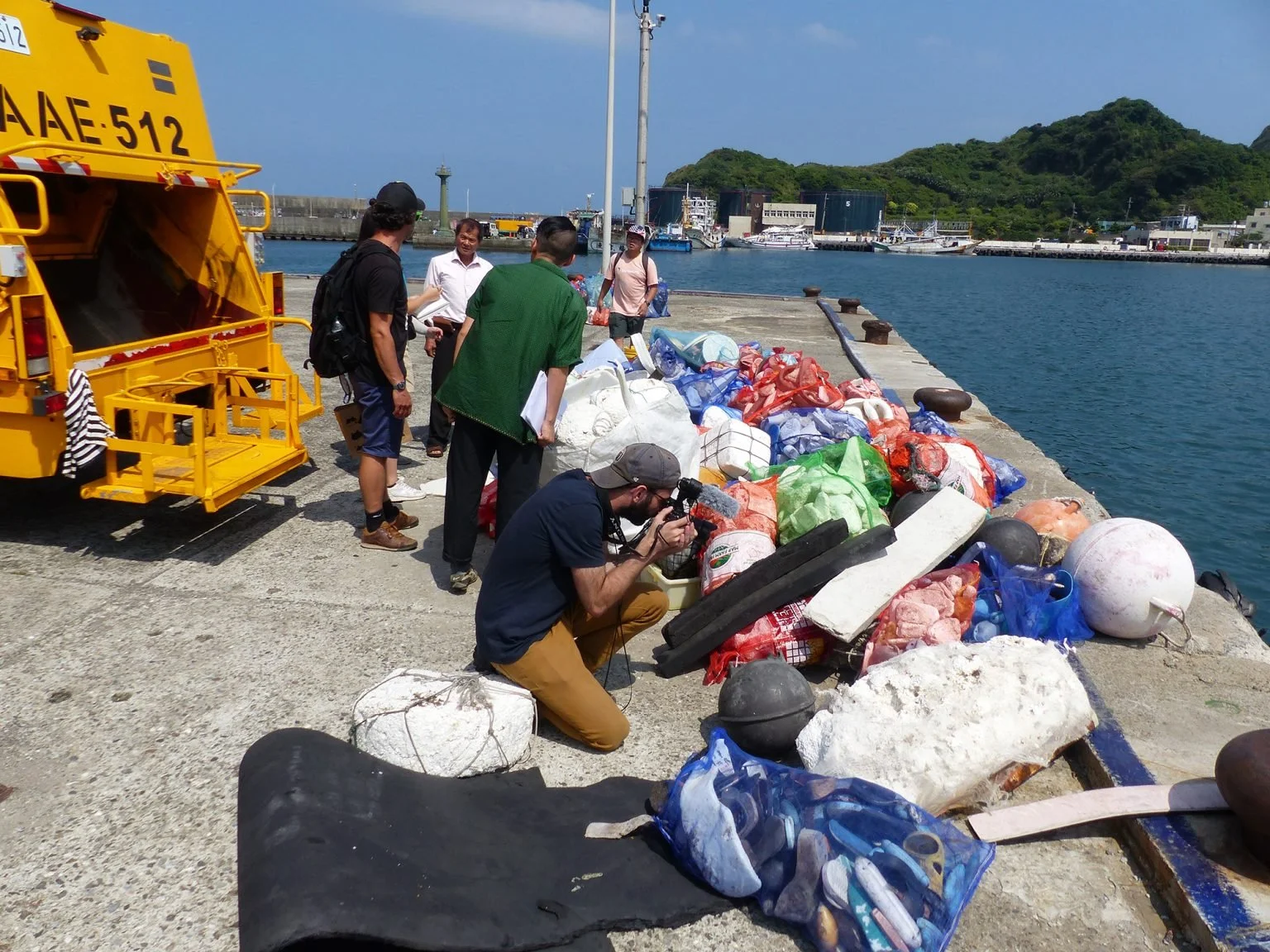
Collection of shoreline waste of Keelung island transported back to Badouzi Harbor for distribution ©raumlaborberlin
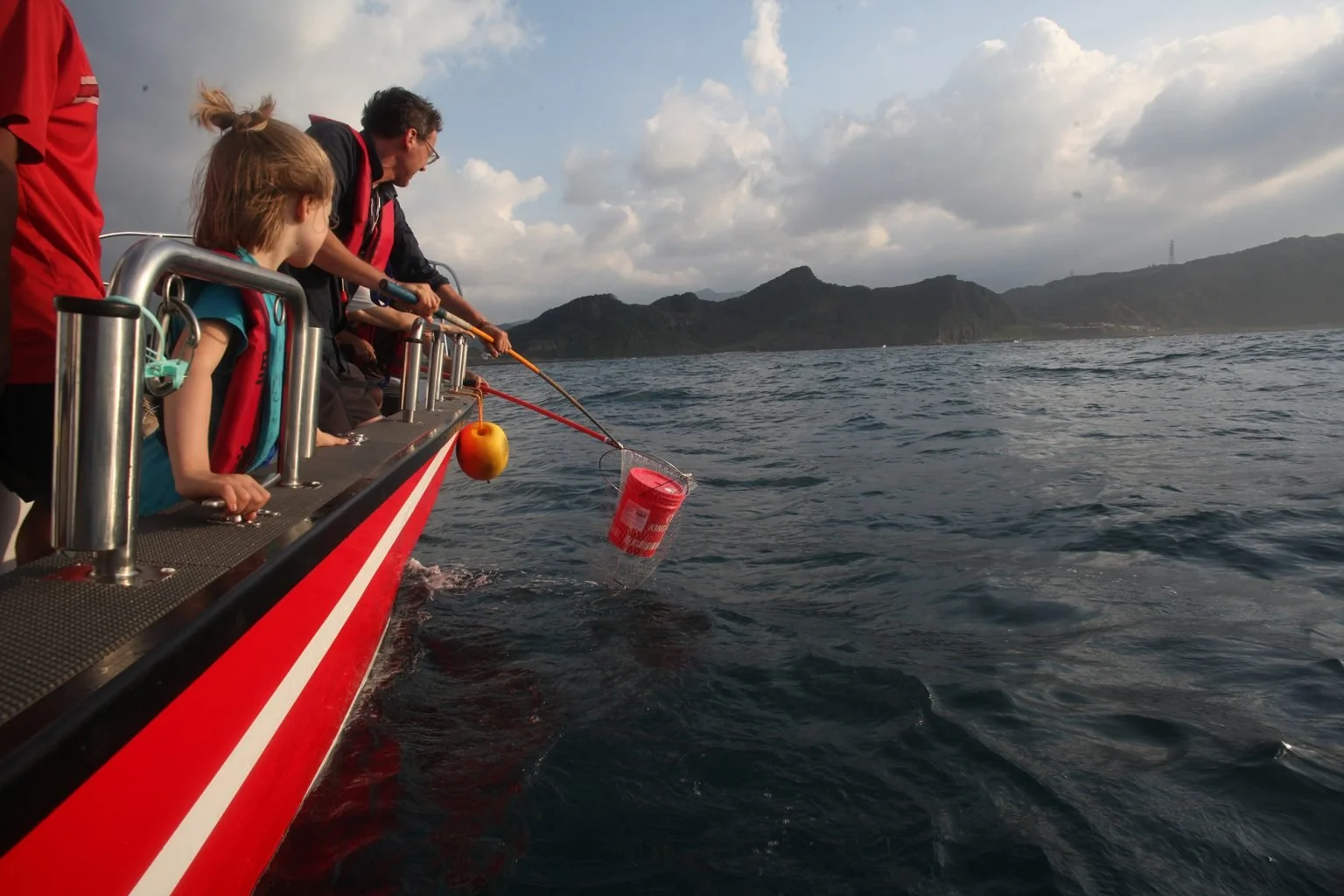
Fishing for waste in the sea of Keelung ©raumlaborberlin
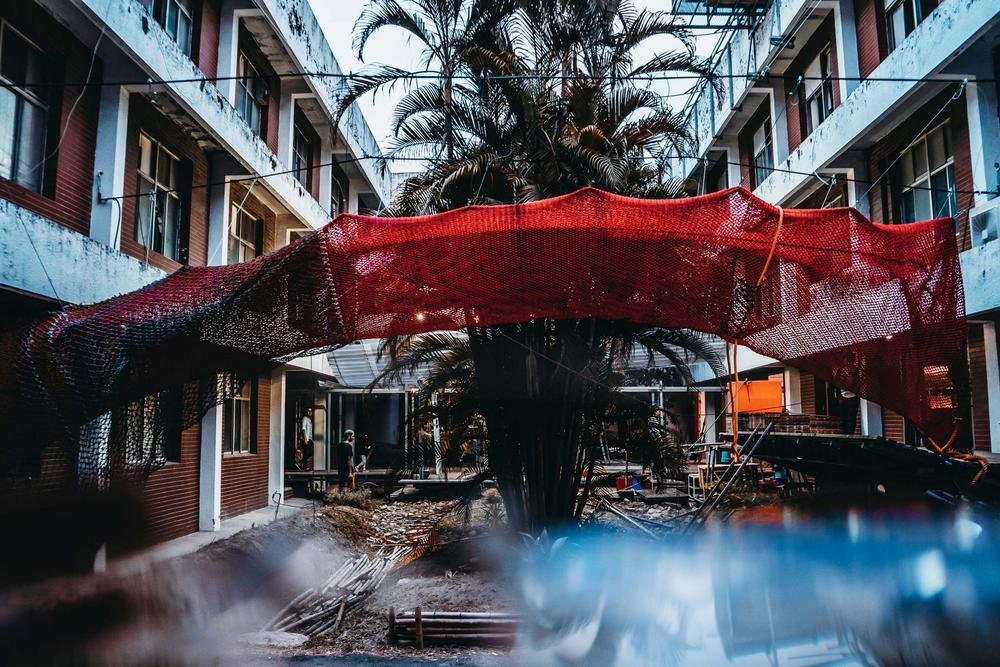
The body as an organ of knowledge perception – walking through a fishing net ©Tara Kan
Site three - Yunlin, the 6th largest oyster producing country vs. the island’s largest plastic refinery
As the world’s 6th largest producer of oyster seedlings, the country’s south-western shoreline is also dominated by a massive quantity of aquafarms producing fish, clam and shrimp. raumlabor investigated the rural villages of Yunlin that lie between aquafarms, oyster banks, growing mountains of oyster shells and Taiwan’s largest production site for the plastic industry, Formosa Plastics. The core oyster farming nursery of the island feeds the country in many ways, with seafood and crops just as much as petrochemical and plastic products. Plastic as chance, plastic as colour, plastic as clothes, packaging, tools, as waste, landfill and pollution, plastic as economic growth, as charity organization and as environmental disaster, plastic as dependency on other countries. It seems obvious: we have to drastically reduce our hunger for more. Not only in Taiwan.
A special thank you to the local support from Mr. Lin (Shallow Water Association, Yunlin).
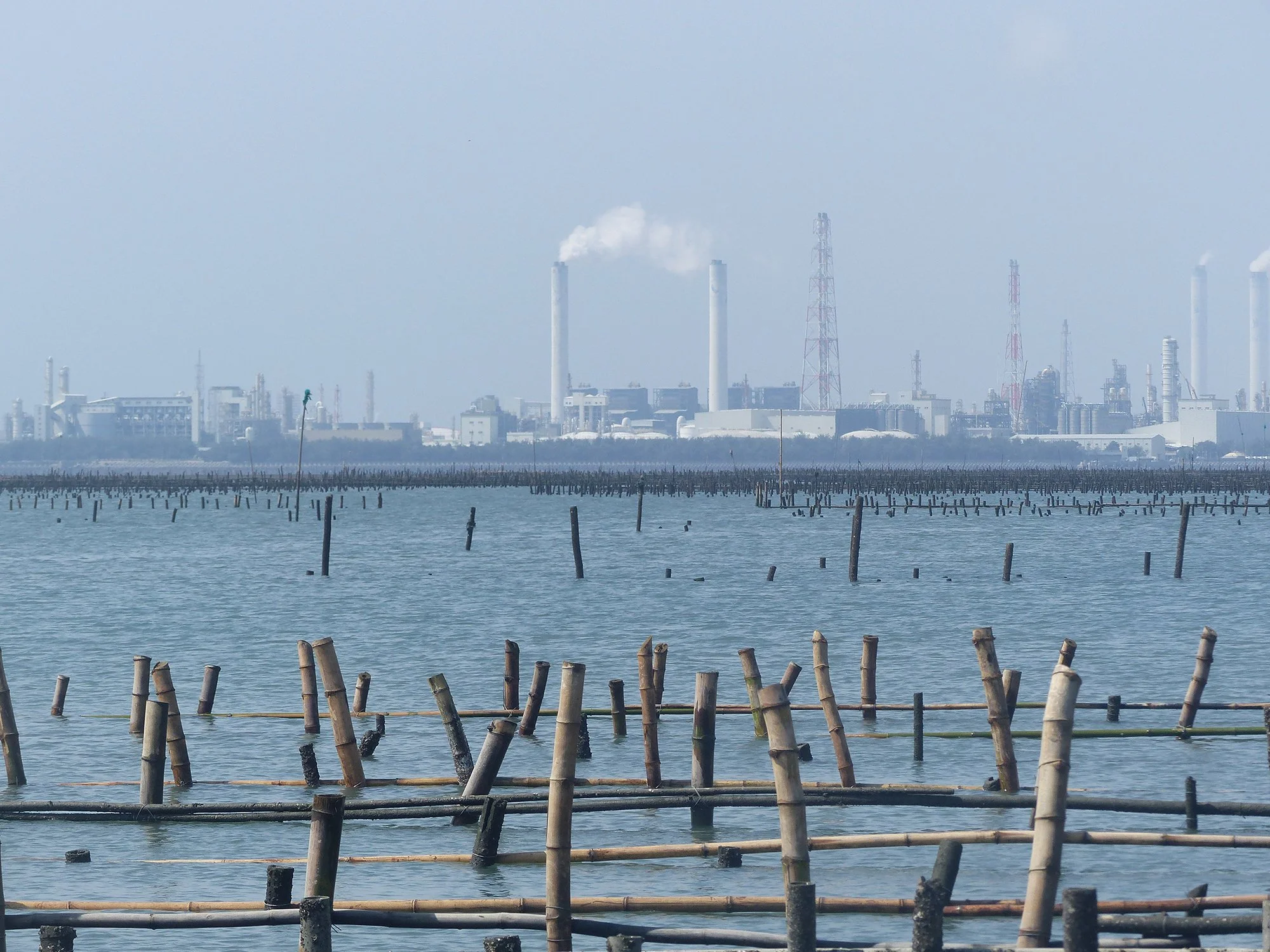
Pollution of the air and the sea ©raumlaborberlin

Oyster shell piles of Taishi ©Sam Boche
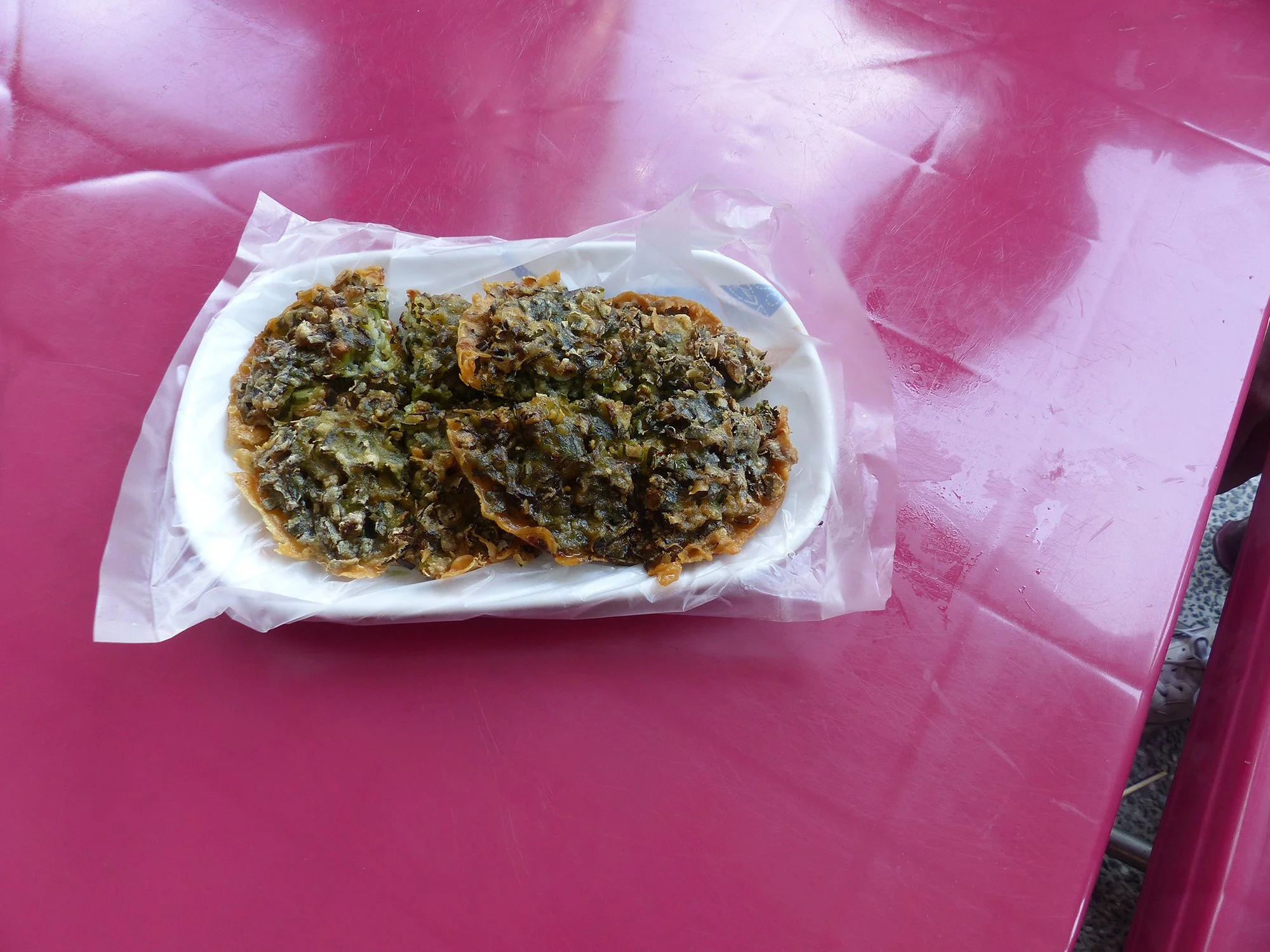
Fried oyster pancake on a plastic bag on a plastic plate
©raumlaborberlin
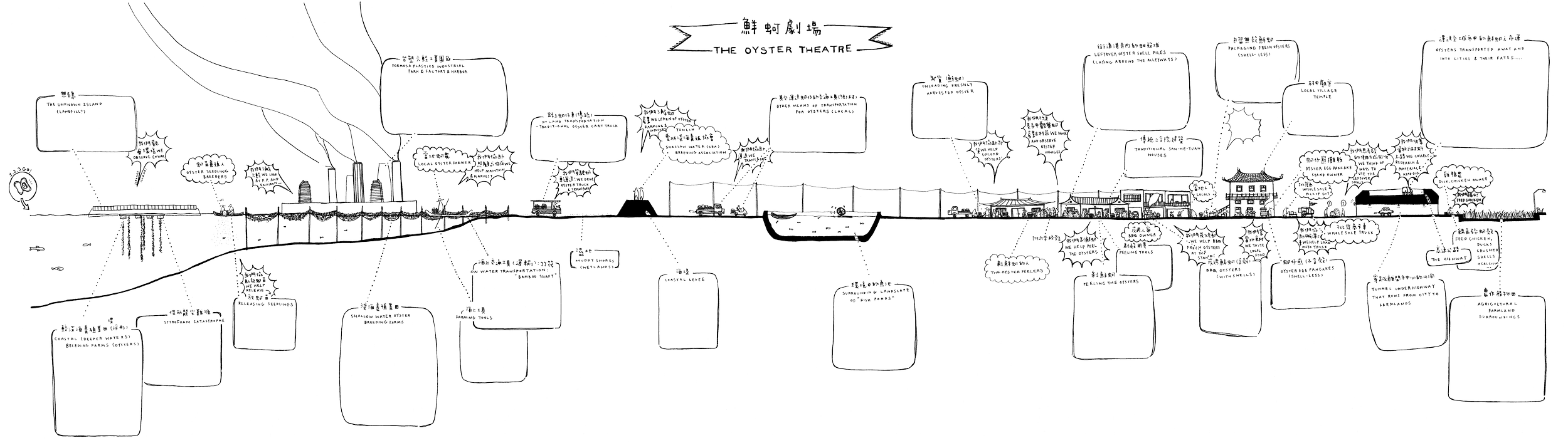
Panorama imagery of the Oyster Theatre in Yunlin
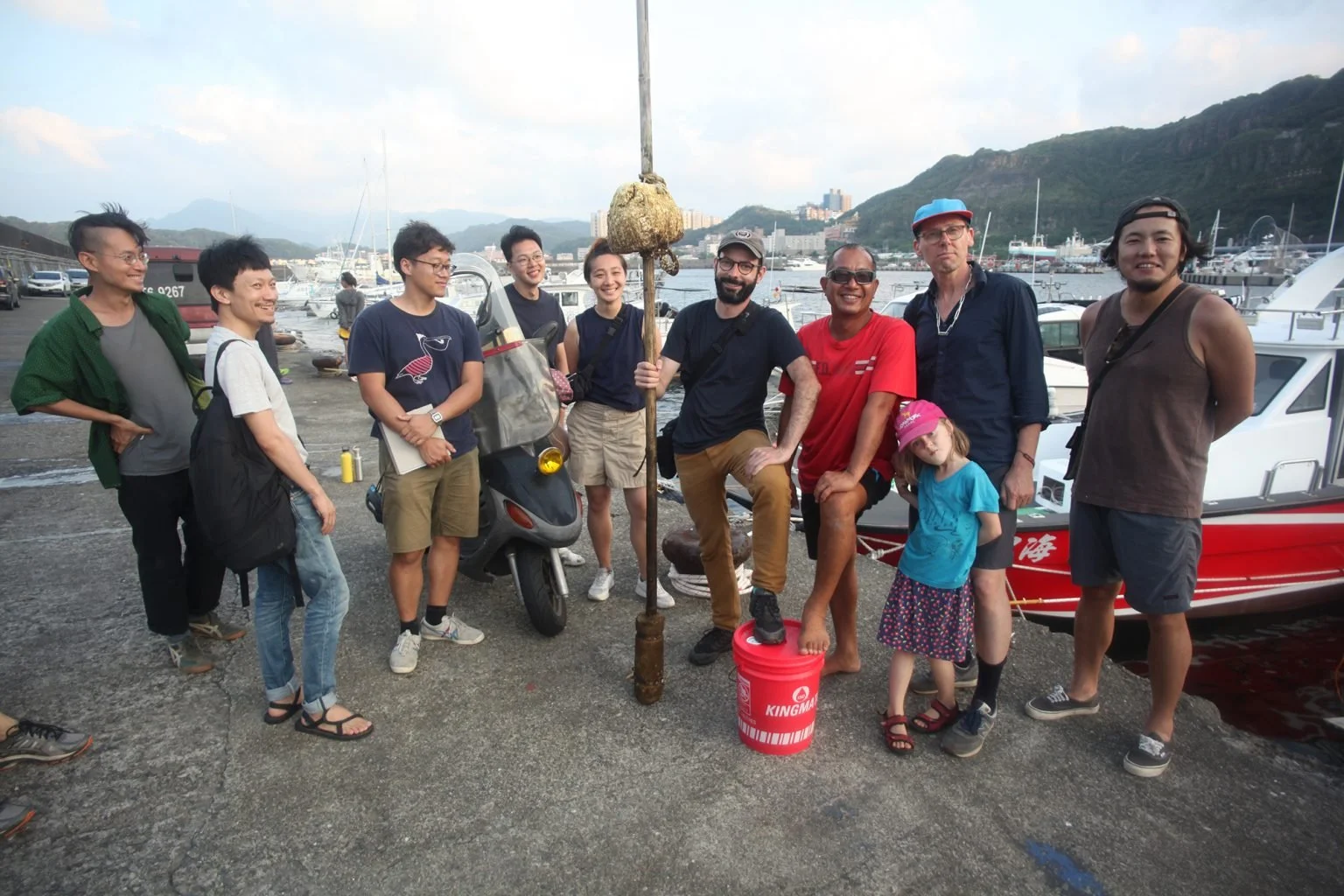
Theatre of flows team in Keelung Harbor ©raumlaborberlin